What Every Travel Photo Leaves Out: Lisbon's Crowd, Wrocław's Empty Square and Venice's Rope
I pulled five random frames from the media archive and at first they had nothing in common. A crowded staircase in Lisbon, a nearly empty square in Wrocław, a marble loggia in Venice, and two pictures of people filming something. Then I put them side by side and the link was obvious. Every one of them is a decision about what to leave out.
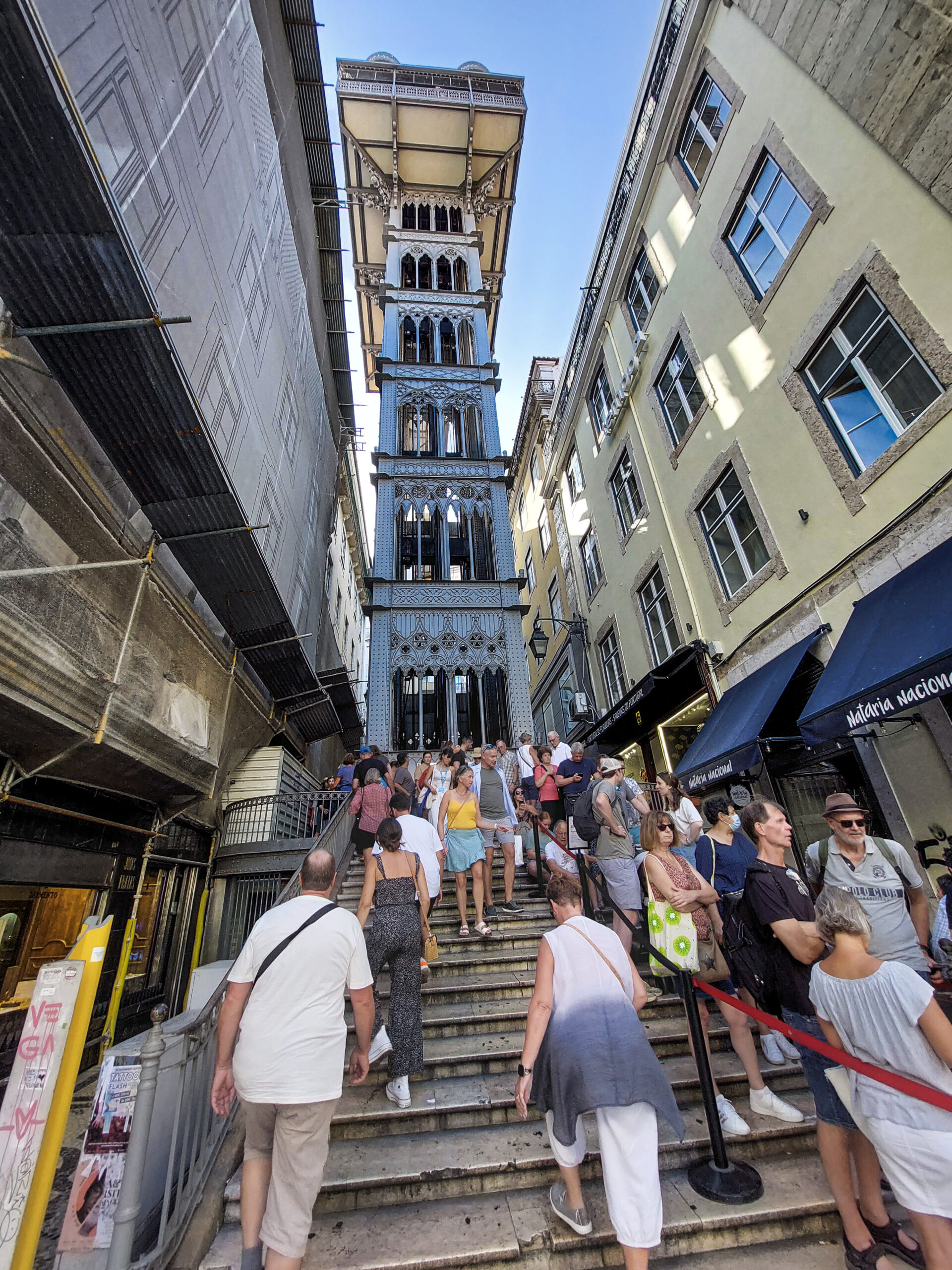
Lisbon keeps the queue
The Santa Justa Lift is a slim neo-Gothic iron tower, and from the bottom of the stairs it looks great, blue-grey against a hard September sky. Now look lower in the frame. There’s scaffolding netting on the left printed with a fake facade, a red rope on a stanchion, a line of people checking their phones, and a stream of visitors trying to squeeze past the ones going the other way.
The frame is wide and shot from low down, so the tower leans in and the crowd stays in. Go tighter, wait for a quiet minute, and you get a lonely iron spire instead. Same place. Nobody would call that version dishonest, but it isn’t what the spot feels like at midday.
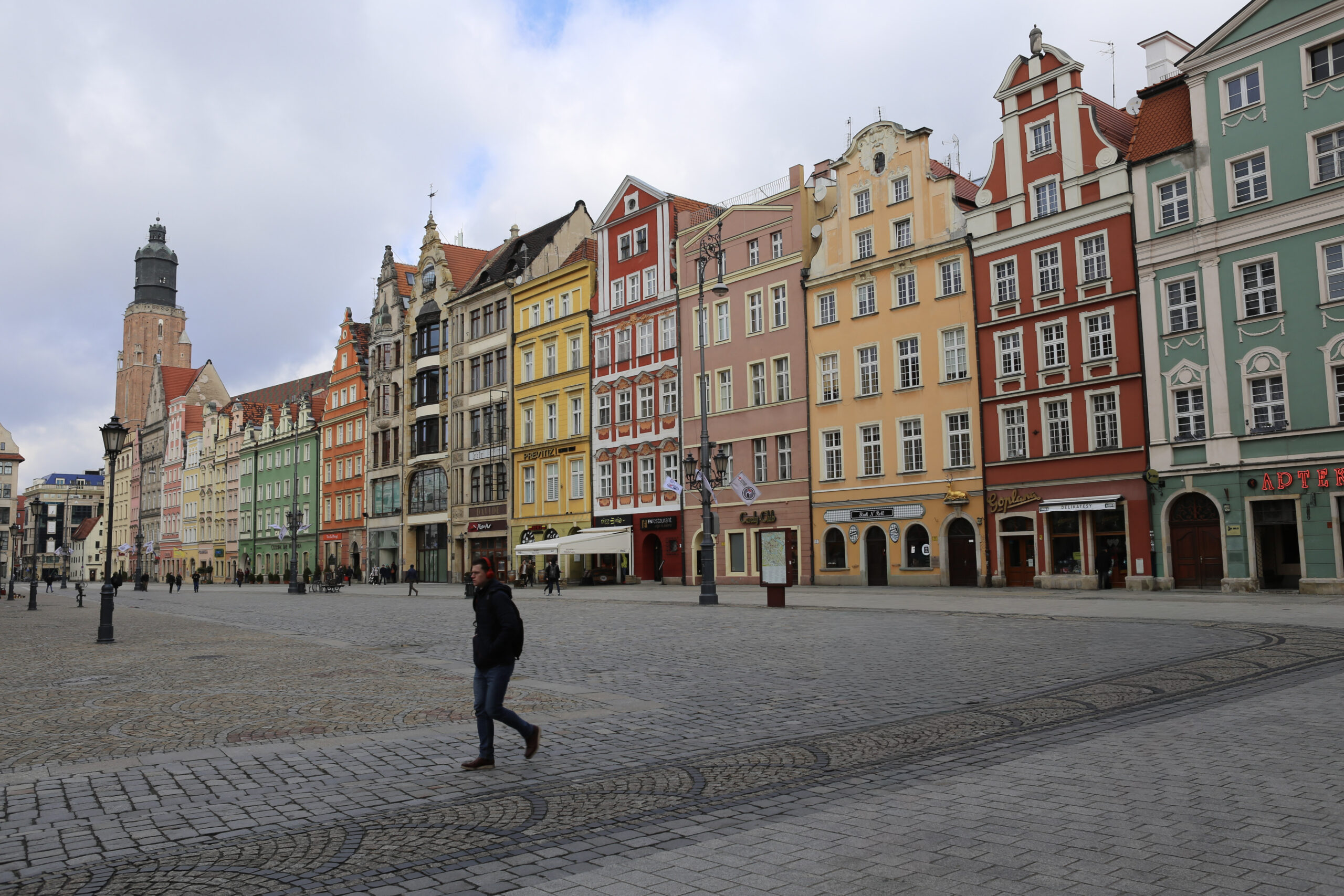
Wrocław loses it
Wrocław’s Market Square is the opposite case. Rows of gabled houses in red, ochre, pink and green run down one side, a dark-capped brick tower sits at the far left, and the cobbles take up half the frame. One man in a black jacket and red headphones cuts across the middle, and that’s about it.
Squares like this get shot early or in bad weather for a reason. An empty square photographs like an idea of a city, and it tells you very little about how anyone uses it. The single pedestrian does all the work here. He gives the place scale and a bit of hurry. Take him out and it’s a stage set.
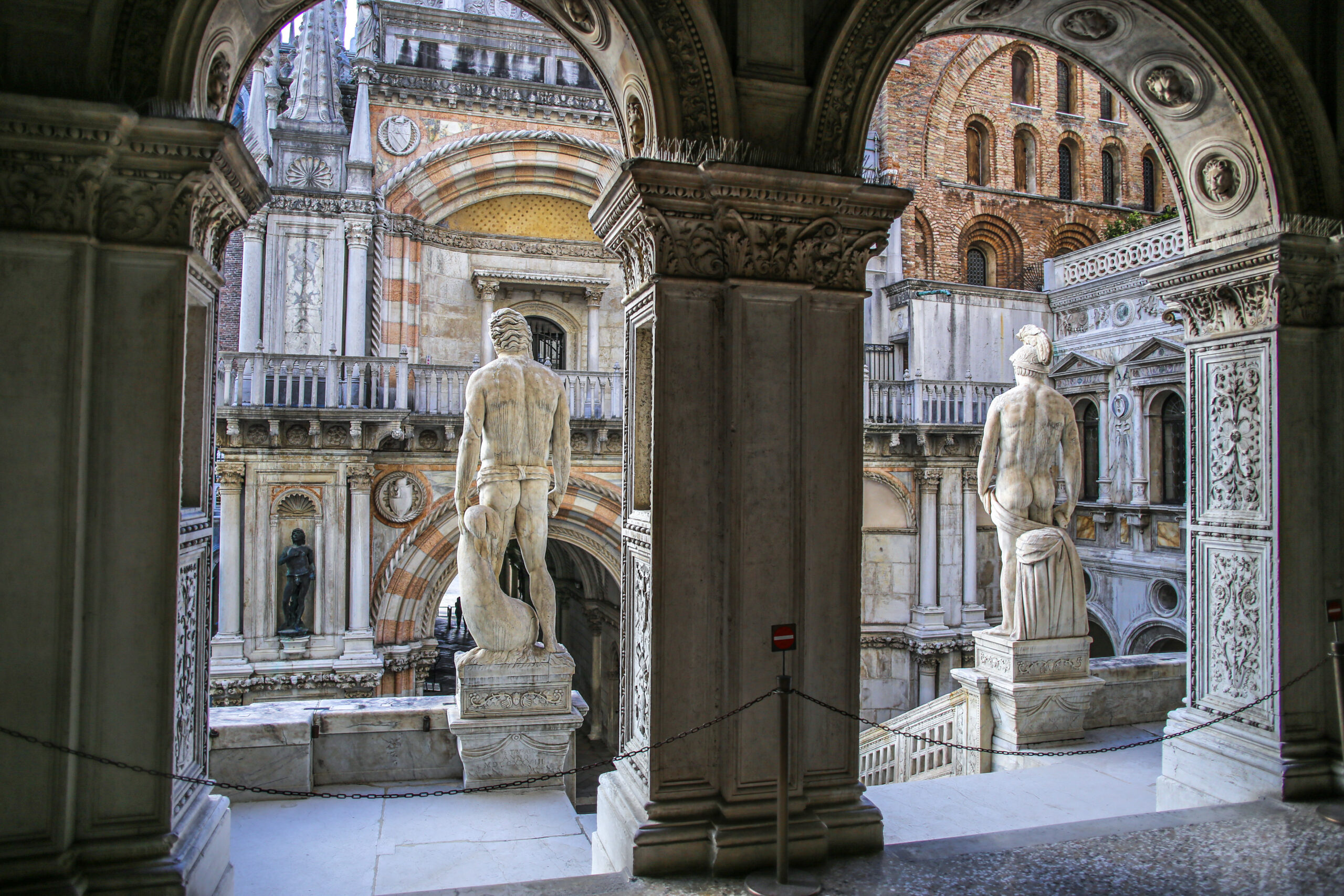
Venice keeps the rope
The usual picture of the Giants’ Staircase at the Doge’s Palace is taken from the courtyard, looking up at Sansovino’s Mars and Neptune facing you. This one is the reverse angle. We’re up on the loggia, behind the two statues, looking out through the arches at what they’ve been looking at for centuries.
There’s a chain across the lower part of the frame and a small red no-entry sign planted in the middle. I like that they stayed. A brochure would clone them out in ten seconds, and the picture would lose the fact that you’re standing somewhere you’re only allowed to look at.
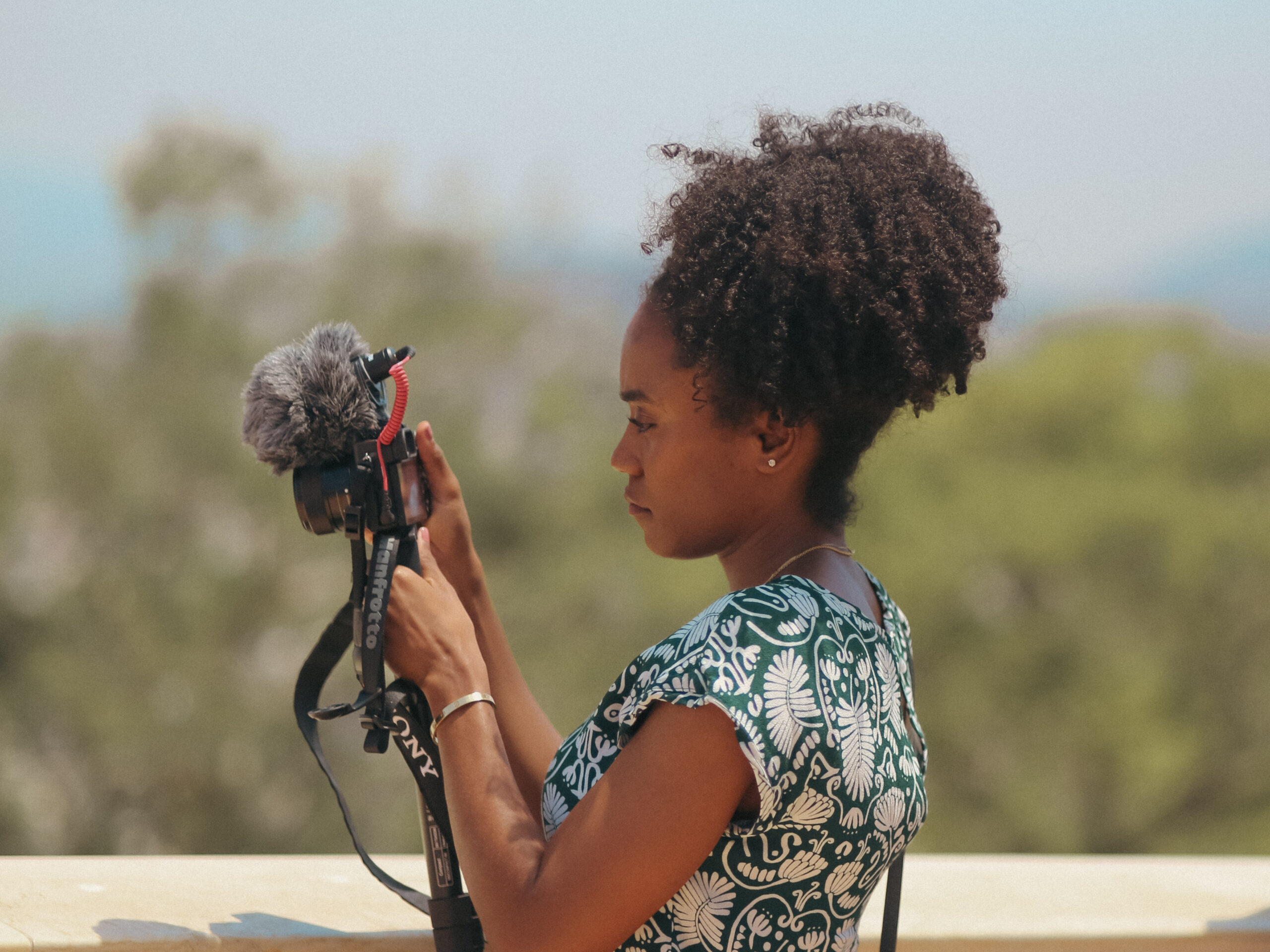
Two people making the pictures
The other two frames turn the camera around. In the first, a woman in a green patterned dress holds a small mirrorless camera with a furry wind cover over its mic, strap reading Sony, and checks her shot in profile against a blur of pines and sea haze. That’s a full video kit for one person, and it’s exactly what the reels crowd carries now. The archive even has a companion item on AI tools for generating reels.
The second frame shows the whole chain. A reporter in a navy body-armour vest with PRESS across the chest talks into a microphone while a broadcast camera on a tripod records him. The operator’s dark silhouette fills the left third of the picture and a big lamp sits over his shoulder. Dusk haze hangs over water behind them.
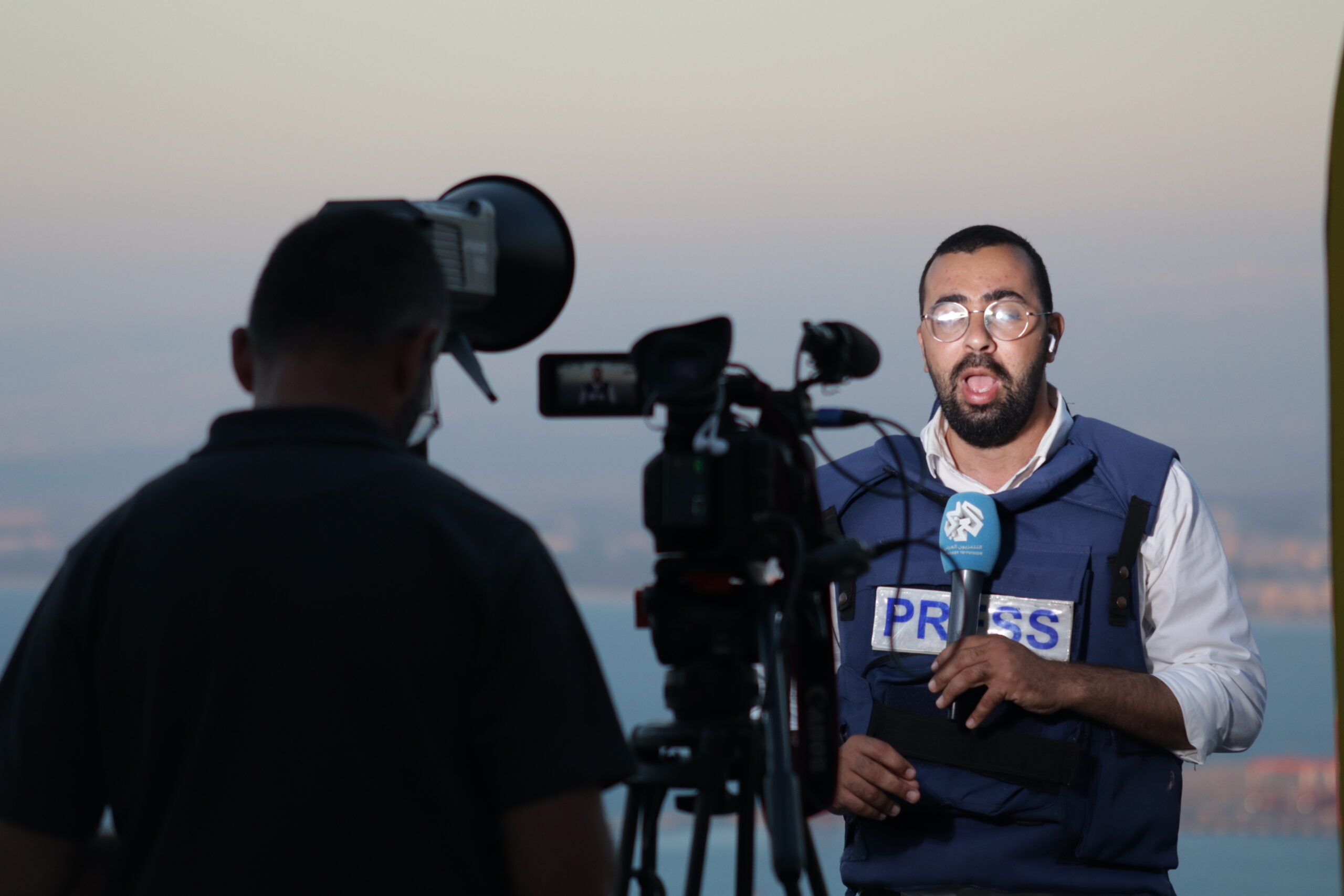
On screen, viewers get a man and a view. In the frame above you also get the lamp, the operator, the cables and the tiny monitor showing the shot. Two people, a camera, a light and a vest, all to produce something that looks like one person just talking.
What’s left out
Lisbon keeps the crowd. Wrocław loses it. Venice keeps the rope. And two of these frames show the crew that normally gets cropped away. None of them is a lie, and none of them is the whole place either.
Next time a landmark looks perfect and calm, remember that someone waited for that.